
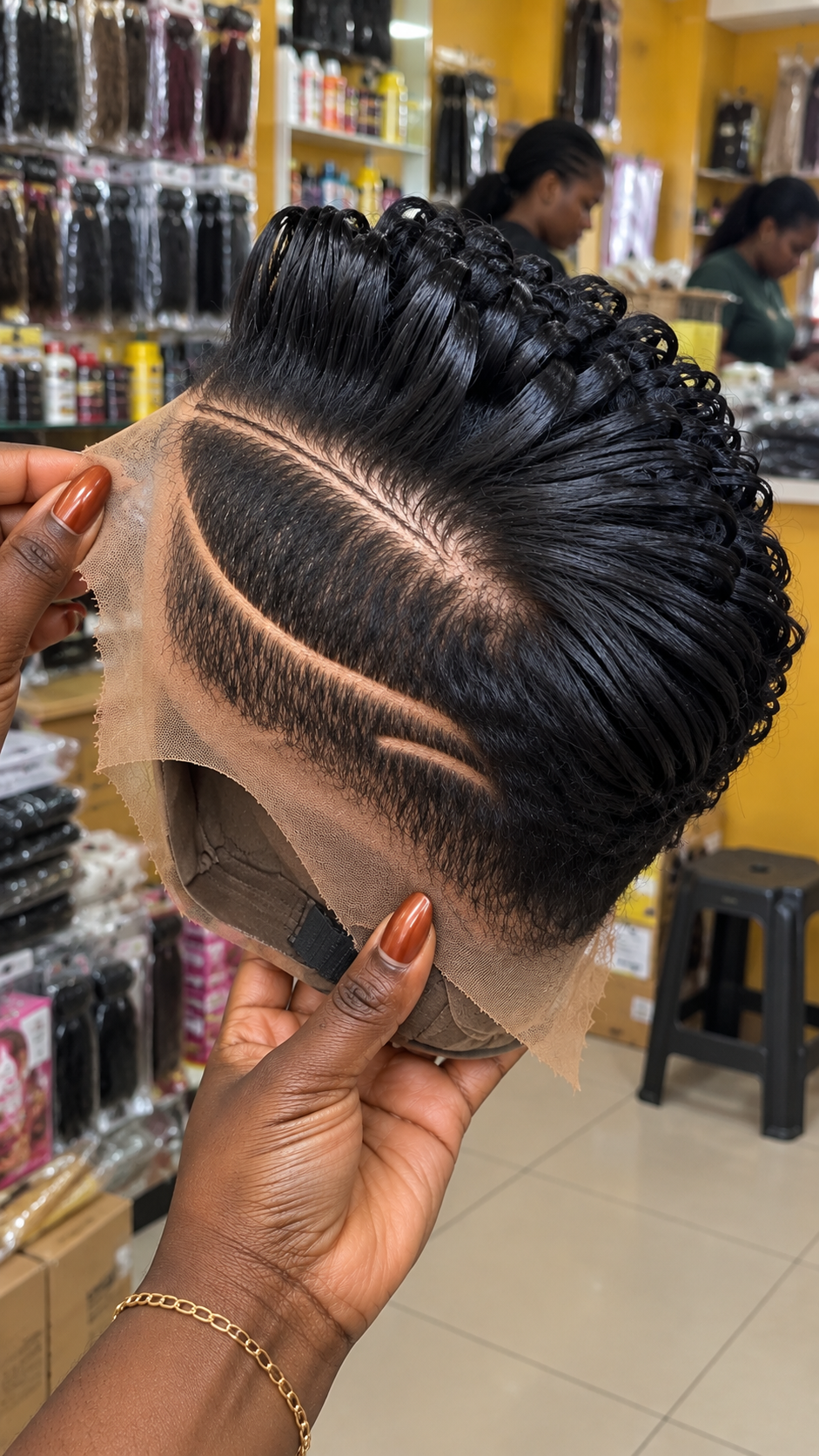
This natural black wig stands out through architecture rather than contrasting color. The photograph shows a sculpted crown built from broad glossy loops, a strong diagonal separation across the side, and a sweeping exposed stripe that finishes with a subtle fork near the rear. Because the entire hairstyle stays within a deep black palette, every visible change in direction becomes easier to notice. Light catches the raised strands while the lower side remains compact, giving the unit a dramatic difference between height and closeness.
The image also reveals valuable construction information before installation. Lace extends beyond the perimeter, the internal cap is partly visible, and the hairstyle has already been shaped into its intended silhouette. For a buyer trying to commission something similar, this view is more useful than a finished portrait alone because it shows how the decorative side area relates to the crown and where the major separation begins.
Recreating this unit successfully requires more than requesting a black curly wig. The crown is not made from ordinary loose curls, and the side decoration is not a random shaved-line effect. The hairstyle depends on carefully controlled strand groups, a long directional parting and a deliberately placed stripe beneath it. Those details should be included in any custom-order brief.
The Black Palette Lets Direction Become the Main Attraction
The hair appears consistently natural black throughout the photograph. There are no obvious blonde, copper, burgundy or silver accents competing with the structure. Instead, the visual variation comes from the way salon lighting reflects from the raised loops and tightly arranged side sections.
This creates an interesting effect. Portions of the crown facing the light look brighter because the strands are grouped together and highly polished, while recessed areas appear much deeper. The result is dimensional even though the actual color remains dark.
For someone ordering this look, color selection should therefore remain restrained. A natural black or comparable deep black-brown shade can preserve the character seen here. Adding numerous bright highlights would change the balance because the viewer would begin following the color pattern instead of the construction.
If a supplier offers several black shades, request unfiltered photographs before choosing. Some fibers labeled black have a blue cast, while others appear warmer or softer under indoor lighting. The reference has a rich neutral appearance, so the closest available sample should be selected visually rather than relying exclusively on a shade number.
The Crown Is Built From Broad Folded Sections
The most noticeable styling work appears across the upper portion. Large groups of strands rise from the base and bend backward into open loops. Each group remains wide enough to resemble a folded ribbon instead of a small spiral curl.
Near the forward crown, the loops stand relatively high. As the pattern travels toward the rear, the sections begin to curve farther backward and become integrated into the rounded shape behind them. This gradual change prevents the hairstyle from looking like a row of identical pieces.
The spacing also matters. Small openings between several loops allow the construction to remain readable. Packing the strands together without separation would create a heavy solid ridge and hide the individual movement visible in the photograph.
A stylist recreating this crown should receive a side-view reference because a front photograph alone would not communicate the elevation correctly. The important instruction is to preserve broad grouped sections with controlled lift, followed by increasingly curved placement toward the rear.
A Diagonal Division Controls the Entire Composition
One of the strongest visual elements is the long diagonal parting beneath the raised crown. It begins toward the forward side and travels backward across the unit. This exposed path divides the hairstyle into two clearly different working areas.
Above the division, the hair is longer and shaped into large loops. Below it, the strands are kept much closer to the foundation. The contrast between those two zones creates the illusion of a barber-inspired side treatment without requiring the upper styling to lose its fullness.
The diagonal angle is particularly important. A horizontal parting would create a completely different profile, while an excessively steep line could reduce the usable space in the lower panel. Here, the path follows a controlled downward sweep that complements the rounded crown.
When requesting a custom version, include this division as a separate specification. Do not assume that asking for “side lines” will communicate it. The main diagonal border and the decorative stripe beneath it serve different purposes and should be discussed independently.
The Lower Stripe Finishes With a Small Forked Accent
Beneath the principal division is a single exposed stripe running through the dense black side section. Its path is long and slightly curved, following the general direction established above rather than cutting straight across the panel.
The most distinctive detail appears near its rear end. Instead of simply stopping, the line develops a small secondary branch. This fork is compact, which prevents it from dominating the side. It works more like a signature at the end of the larger movement.
That distinction matters for ordering. Multiple parallel stripes, a zigzag design or a large geometric motif would all change the identity of this unit. The reference uses restraint: one primary side stripe and a small branching accent.
The exposed path also remains narrow enough for the surrounding black hair to dominate. This balance makes the line visible without turning the entire side into an open graphic pattern. A skilled stylist should preserve both the width of the stripe and the amount of dark hair surrounding it.
Why the Compact Side Section Matters
The lower side is intentionally close to the cap and visually dense. This creates a stable base beneath the much larger loops above it. Without that difference in height, the crown would lose much of its impact.
The compact section also provides the dark background needed for the exposed stripe to read clearly. The contrast is created by scalp-toned separation against natural black hair rather than by adding another hair color.
For this reason, buyers should be careful when requesting extra volume around the side. Increasing the density or length in the wrong area could cover the decorative path and weaken the separation between upper and lower zones.
The side design should remain visible when the wig is positioned correctly. Cap sizing therefore becomes part of the aesthetic result, not merely a comfort issue. A unit that rotates after installation could shift the stripe away from its intended position near the temple.
The Front Perimeter Shows a Customizable Lace Area
Lace is visibly extending beyond the hair-bearing section in the photograph. The exposed mesh gives the installer material that can be prepared according to the wearer’s fit and hairline requirements. However, the photograph alone does not establish the exact commercial lace specification.
Before ordering, ask the maker what lace material and shade will actually be used. If several shades are available, request photographs against skin in ordinary lighting. A mesh that looks suitable on a product screen can behave differently once placed directly against the wearer’s complexion.
The forward hair density should also be discussed. The photograph shows a deliberately constructed area behind the lace rather than an extremely sparse perimeter. That density supports the barber-inspired side panel while still leaving enough lace beyond it for fitting.
Do not trim the lace immediately after receiving a custom unit unless you are comfortable performing that work. Because the side stripe sits close to the perimeter, an experienced wig stylist can help position the unit before excess lace is removed.
Interior Hardware Should Be Checked Before the First Fitting
The photograph provides a partial view of the internal cap. This is useful because buyers can see that the decorative exterior is supported by an actual wig foundation rather than being presented only as a hairstyle concept.
Before installation, inspect the inside for secure stitching, intact adjustment components and comfortable placement of any combs or bands. These practical details can influence how steadily the unit sits once worn.
Cap measurements deserve special attention with this design. The diagonal border and lower stripe have intended positions on the side of the head. If the cap is substantially too large or too small, the decorative section may sit too far forward, backward or downward.
Ask the maker for their own measurement guide rather than assuming every wig company uses identical sizing. If the unit is being made specifically for you, provide the requested measurements carefully and confirm them before production begins.
Give the Stylist a Map Instead of a Generic Hairstyle Name
A strong booking request can divide the design into zones. First describe the crown: natural black hair, broad glossy loops, high lift toward the front and controlled backward movement. Next describe the diagonal division separating the crown from the side.
Then explain the lower area: dense close-set black hair with one long sweeping exposed stripe and a small fork near the rear. Finally, discuss the visible lace perimeter and cap requirements.
This approach is more reliable than trying to find a single hairstyle name. Highly customized units often combine techniques that different stylists describe differently. A reference photograph plus a zone-by-zone description reduces the chance of receiving a generic substitute.
It is also worth asking whether the maker has previously produced sculpted loop crowns. Creating consistent elevation and strand grouping requires a different skill set from installing loose curls or straight hair.
Request Progress Photos Before the Crown Is Permanently Set
One useful ordering strategy is to establish an approval point during production. Ask for a photograph after the general crown direction and side pattern have been mapped but before every finishing step is completed.
At that stage, check the silhouette rather than focusing only on tiny details. The forward loops should have visible elevation, the rear should curve into a controlled rounded shape, and the diagonal division should occupy a similar proportion of the side as the reference.
Next, request a direct side photograph. Confirm that the long stripe follows a gentle sweep and that its small branching accent remains compact. If the decorative path is significantly different, this is the time to discuss correction.
A final photograph should show the exterior from multiple angles and the inside of the cap. Remote buyers can then compare the finished unit against the original brief before shipping.
Salon Installation Can Protect the Intended Placement
A professional wig stylist can be particularly helpful with a design whose side work needs to align precisely. During an appointment, the unit can be positioned while the stylist checks where the diagonal border and stripe fall in relation to the temple and ear.
Bring the reference photograph to the appointment even if the stylist did not manufacture the wig. It gives them a visual target for orientation and helps prevent the unit from being rotated merely to make another area appear symmetrical.
Ask what preparation is required before arriving. Different installers may have preferences regarding hair underneath the cap, lace preparation and products used during fitting.
If the wig is being purchased and installed at the same salon, request one complete quote covering the unit, customization and installation. This makes it easier to compare the total service cost with ordering a unit separately and booking another professional afterward.
Protecting the Sculpted Shape Between Wears
The crown should not be flattened during storage. Its broad loops depend on elevation, so the unit needs enough surrounding space to keep those sections from being compressed.
A suitable wig stand can help preserve the general profile, provided it supports the cap without stretching it. Avoid placing heavy objects on top of the hair or forcing the wig into a container that presses directly against the crown.
Do not repeatedly comb through the loop sections unless the maker specifically instructs you to do so. The strands have been grouped intentionally. Separating those groups can change the ribbon-like appearance and make the crown look less organized.
Product choice and heat exposure should depend on the actual fiber used in the finished wig. The image does not prove whether the unit is human hair, synthetic or a blend. Confirm the material with the seller before applying heat or chemical products.
Premium Custom / Standard Custom / Basic Human Hair / Premium Synthetic / Basic Synthetic
| Category | Estimated Planning Range | What the Quote May Include |
|---|---|---|
| Premium Custom | $480–$975+ | Personal cap sizing, natural black color selection, sculpted loop crown, custom diagonal division, side stripe detailing, lace work and finishing |
| Standard Custom | $295–$520 | Made-to-order foundation with structured crown styling and selected side customization |
| Basic Human Hair | $190–$350 | Human-hair foundation with specialized sculpting and decorative side work potentially priced separately |
| Premium Synthetic | $120–$235 | Higher-grade synthetic fiber with pre-shaped crown sections and limited customization |
| Basic Synthetic | $65–$145 | Entry-level foundation with simplified loop work and fewer personalized construction choices |
These are general planning estimates rather than the confirmed selling price of the photographed unit. Final pricing can change according to hair material, lace choice, cap construction, customization labor, stylist experience, installation, shipping and local market conditions. Ask for a written quotation that separates the wig price from additional styling or fitting services.
A Practical Order Checklist for This Exact Look
Start by sending the reference photograph without cropping the side section. Tell the maker that the natural black color should remain consistent and that the visual interest must come primarily from the sculpted construction rather than added highlights.
Specify broad looped sections across the crown with stronger elevation toward the forward area and a gradual backward transition. Mark the long diagonal division as an essential boundary. Beneath it, request a compact dark panel with one sweeping exposed stripe and the small forked ending visible in the reference.
Next, confirm the lace material and shade, cap measurements, internal adjustment options and whether the unit will arrive fully styled. Ask how much reshaping may be necessary after shipping and whether the seller recommends professional installation.
Before approving the finished order, compare side placement, crown height and overall proportion rather than judging the unit from color alone. This particular wig gets its identity from controlled geometry and directional styling: the dark palette creates continuity, the elevated loops establish the silhouette, the diagonal separation organizes the side, and the single forked stripe provides the finishing signature.
Search Terms
natural black loop crown wig · sweeping side stripe wig · forked side line lace wig · black ribbon loop hairstyle · diagonal parting sculpted wig · natural black raised crown wig · curved side panel wig design · glossy black looped lace wig