
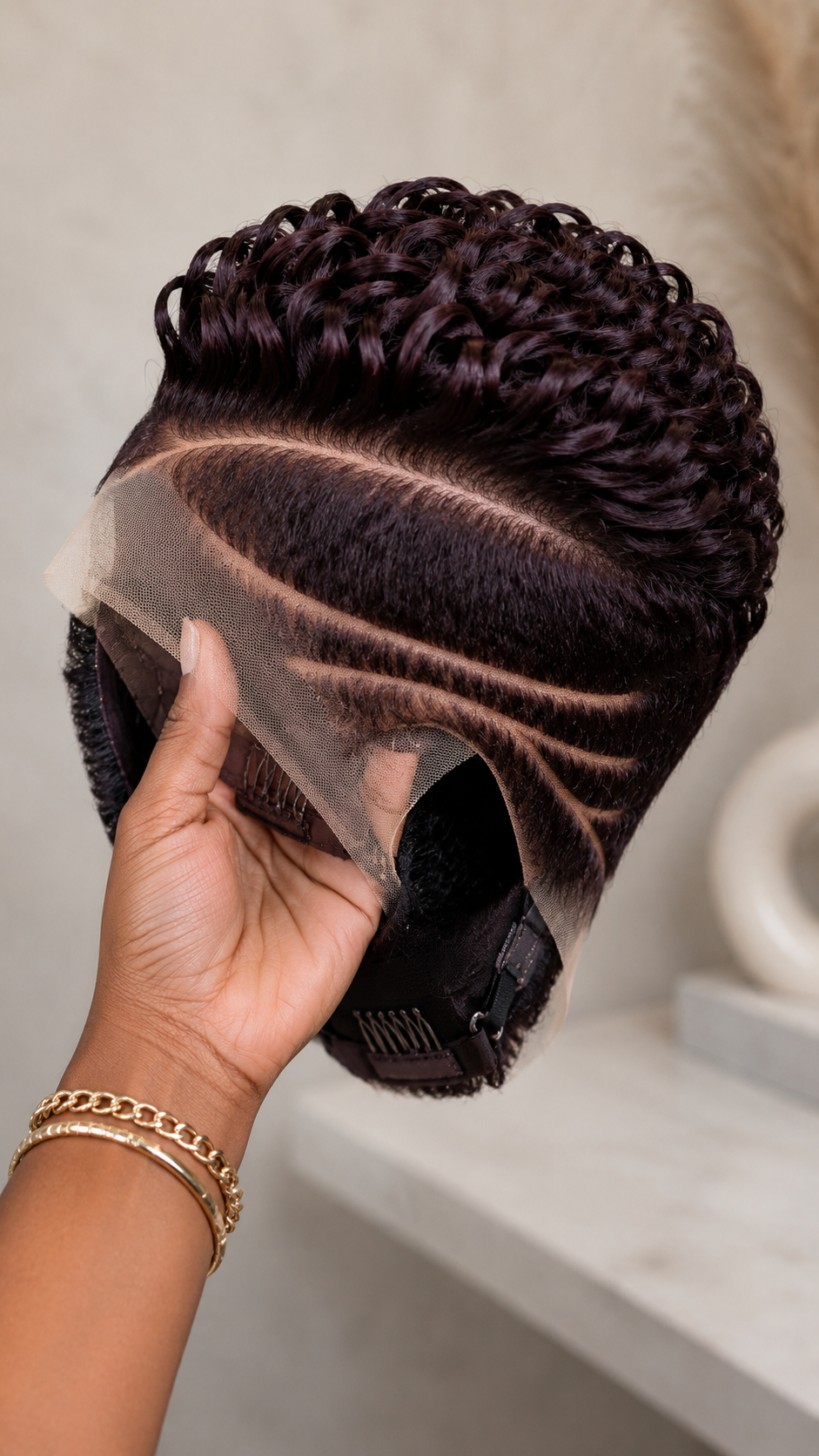
The wig you wear to protect your hair can quietly harm it if you forget the scalp underneath. That is the part no product photo shows and few sellers mention: a unit sits over your own scalp and hair for hours, and whether wig-wearing stays comfortable and sustainable for years depends far more on how you care for what is under the cap than on the unit itself. This deep plum unit will look after its own job on top. The scalp beneath it is the part that actually needs you, and looking after it is what lets you keep wearing units happily rather than running into problems that a wig then hides until they are hard to fix.
A scalp under a unit faces a few specific challenges. It sweats and holds warmth under a cap, which invites buildup, itch, and odour if it is not cleansed. It can be pulled tight by an over-secured unit, which stresses the edges over time. And because a wig covers everything, early signs of trouble, flaking, soreness, thinning at the hairline, are easy to miss until they are advanced. None of this is a reason to fear wigs; it is a reason to treat the scalp as part of the routine rather than an afterthought.
The good news is that scalp care under a unit is simple and mostly about consistency. Cleanse it, let it breathe, do not wear units punishingly tight, keep the hair beneath clean and moisturised, and pay attention to how your scalp feels. Do those, and wig-wearing stays something your scalp tolerates comfortably for the long run instead of something it slowly suffers under.
Where To Buy A Unit That Is Kind To Your Scalp
Custom makers who understand daily wear build breathable caps that sit comfortably over your own hair, so ask whether the cap breathes and how it suits long wear over braids or cornrows. A maker thinking about the scalp builds for comfort; one thinking only about the top may build a cap that traps heat.
Instagram and TikTok sellers sell the look, so ask directly about cap breathability and comfort for long hours. A unit that looks good but bakes your scalp is not one you can wear sustainably, so ask what the base is like against the skin.
Etsy works with makers who describe the cap and comfort, with reviews from long-term wearers. The risk is a beautiful unit on a hot, tight cap. Read reviews for anyone mentioning scalp comfort or itch over a full day.
Marketplaces like Amazon, AliExpress, and Temu vary in cap comfort, and cheaper caps are often less breathable. Some suit long wear and many do not. Judge by reviews about comfort and breathability, not just the style.
Local beauty supply shops and salons let you try the cap against your own scalp and judge how it breathes and grips, and a stylist can fit it without over-tightening. You pay a premium in-store, but a comfortable, scalp-friendly fit is worth it for daily wear.
Vendors and wholesalers direct focus on units, so judge the cap for breathable, gentle wear. For long-term scalp comfort, a comfortable base matters as much as the hair.
Regionally, makers who build for comfortable daily wear come from Lagos, Accra, Atlanta, London, and across South Africa, where long-term wig-wearing over protected hair is well understood.
Vet the seller the usual way: check the account age, look for real buyer photos, time a plain question for a genuine reply, and ask whether the cap is breathable and gentle for daily wear over your own hair. A seller who thinks about comfort is thinking about your scalp.
Red flags: no thought given to the cap or comfort, reviews mentioning itch or heat, and a tight, non-breathable base sold for daily wear.
When you order, send your measurements taken over your usual braid-down, and ask for a breathable cap comfortable for long wear. That points the maker toward something your scalp can tolerate all day.
Contact / order inquiries: WhatsApp [WhatsApp: +XX XXX XXX XX XX].
How Much It Costs
Scalp care itself costs little, and it protects the far larger investment of your units and your own hair, so it is the cheapest, highest-value habit in wig-wearing.
Tiered pricing. The units run as usual: human hair, glueless with a breathable cap, roughly $150 to $430 depending on build, with a deep plum adding a little for the colour; good synthetic $60 to $150. The scalp-care side is small: a gentle cleanser, a light scalp oil or tonic, and a satin cap or bonnet, together a modest one-off and a small ongoing spend.
What that includes and excludes. The unit price covers the wig and cap. Scalp and hair care underneath, cleansers, moisture, and the occasional break from wearing, sit alongside it and cost little.
Shipping and duty. These sit outside the unit price and change with where you live, so plan a realistic band and confirm your own country’s import rate.
Ongoing costs. Cleansing the scalp, moisturising the hair beneath, and washing the unit itself, all small and routine. The real cost of skipping them is not money but scalp problems and weakened hair, which are far more expensive to deal with than to prevent.
First-year total. A unit plus shipping plus any customs plus a small scalp-care kit tends to land between a low three-figure sum and roughly double the sticker, with scalp care being a tiny fraction that protects everything else.
Cost per wear. A comfortable, well-kept scalp lets you wear units often and for years, which spreads the cost of everything. Scalp neglect that forces you to stop wearing units is the most expensive outcome of all.
What a very low price signals. A very cheap unit often means a hot, non-breathable cap that is harder on the scalp, so a bargain on the cap can cost you in comfort. Judge the base, not just the price.
Deposit structure. For custom work, thirty to fifty percent down with the balance before shipping is standard. Use a method you can dispute, and confirm the cap suits comfortable daily wear before releasing the last part.
Shipping, Delivery, And What To Expect After Ordering
A new unit does not care for your scalp on its own, so set up a routine from the first wear rather than waiting for a problem. Ask that the unit ship protected, choose a tracked service for custom work, and confirm your country’s import charge before it lands. When it arrives, braid or flatten your hair cleanly, make sure your scalp is clean and moisturised, and fit the unit without over-tightening. What you unbox is the top layer; the routine underneath, cleansing, moisture, and breaks, is what keeps your scalp healthy enough to wear it comfortably.
Cleanse The Scalp, Not Just The Wig
People wash the unit and forget the scalp, but the scalp is where sweat, oil, and product build up under a cap, and buildup is what causes itch and odour. Cleanse your scalp on a regular schedule, whether by washing your own hair between installs or cleansing the scalp directly, so nothing sits and irritates. A clean scalp is the foundation of comfortable wig-wearing, and it is the step most often skipped.
Give Your Scalp Time To Breathe
A scalp under a cap for long stretches benefits from breaks, so build in wig-free time to let it breathe and recover. Sleeping without the unit, having a day off between installs, or simply removing it at home helps the scalp stay healthy rather than permanently covered. Units are protective styling, and protection works best when the protected part gets air too, not when it is sealed away without pause.
Do Not Wear It Too Tight
Security matters, but a unit cranked tight or edges glued and pulled hard put steady tension on the hairline, and over time that stresses the very edges you want to keep. Fit the unit to your size so it holds without squeezing, use a grip band rather than punishing tightness, and be gentle at the hairline. Comfortable security protects your edges; painful security slowly thins them.
Watch For What The Wig Hides
Because a unit covers everything, keep a quiet eye on how your scalp feels and looks. Persistent itch, flaking, soreness, or thinning at the edges are worth noticing early, since a wig can hide them until they are advanced. None of this is common with good habits, but if something does not settle, it is worth seeing a professional or a dermatologist rather than covering it and hoping. Paying attention is simply part of caring for the scalp you cannot always see.
Before You Pay
- Is the cap breathable and gentle enough for comfortable daily wear?
- Do I have a routine to cleanse my scalp, not just the unit?
- Can I build in wig-free time for my scalp to breathe?
- Will the unit hold securely without being pulled painfully tight?
- Am I ready to notice and act on any scalp trouble rather than cover it?
Trimming The Lace
The lace comes off the front the usual way, and fitting it without gluing or pulling too hard at the hairline protects your edges as well as the look. Trim in small offset steps and leave a shallow margin rather than cutting flush, and aim for a secure but gentle hold at the front. If this is your first unit, let a stylist fit and cut it, and ask them how to keep your scalp and edges healthy under it, since a good fit is kind to the scalp as well as flattering.
Search Terms
breathable cap pixie wig · scalp friendly short wig · glueless plum pixie unit · comfortable daily wear pixie · deep plum short curl wig · protective pixie wig cap · gentle hairline pixie wig · long wear pixie unit
Final Thoughts
This plum unit will do its job on top, but how long and how comfortably you keep wearing units at all comes down to the scalp underneath, the part no photo shows and neglect quietly harms. A scalp under a cap sweats, holds heat, and can be pulled tight, so it needs cleansing, breathing room, a gentle fit, and a little attention, none of it difficult, all of it easy to skip.
Buy a breathable, comfortable cap, and pair it with a simple routine: cleanse the scalp, moisturise the hair beneath, give it wig-free breaks, avoid punishing tightness, and notice early if something feels off. Do that, and wig-wearing stays sustainable and comfortable for years, with your own scalp and edges healthy under whatever you wear. The unit is the part everyone sees. The scalp is the part that decides how long you get to keep enjoying it.